Choosing Between REST, GraphQL, and gRPC in 2026
Three serious API styles, three very different operational profiles. A practical decision framework for picking the one your team can actually live with.

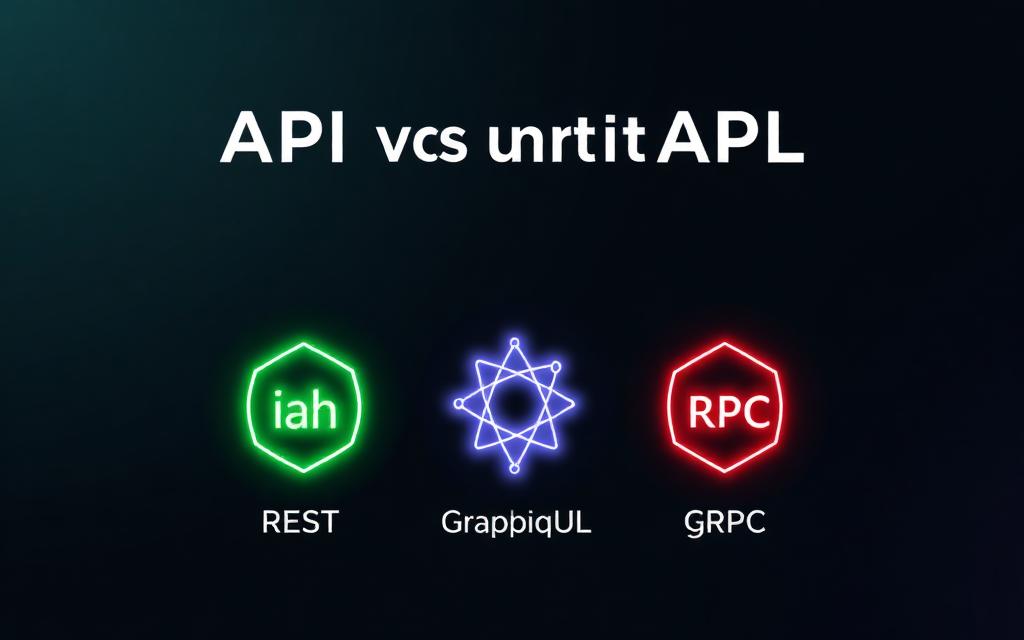
Why this is not a religious question
REST, GraphQL, and gRPC all work in production at enormous scale. The decision is not about which is technically best — they all are, for different problems. The decision is about which fits your team, your consumers, and your operational maturity.
REST is still the right default
For public APIs and most internal HTTP APIs, REST with JSON is the right default in 2026. The tooling is mature, the cache story works at every layer, every client speaks it, and the operational story (logs, metrics, debugging) is universally understood.
OpenAPI 3.1 gives you typed clients in every language. JSON Schema validates request and response bodies. The 'REST is too verbose' complaint is mostly an indictment of bad API design, not the protocol.
When GraphQL pays off
GraphQL wins when you have multiple consumer types — web, mobile, partner — with very different data needs, and a federated team owning the API. The single endpoint lets consumers request exactly what they need; the federation gateway lets multiple teams contribute to a unified schema.
It loses when your operational team has not invested in the depth limiting, complexity analysis, and per-query caching that production GraphQL requires. A naive GraphQL endpoint is a denial-of-service waiting to happen.
When gRPC pays off
gRPC wins for internal service-to-service communication where latency, payload size, and code generation matter more than human readability. Protocol Buffers give you compact binary payloads and forward-compatible schemas. The streaming RPC modes (server, client, bidirectional) cover use cases REST handles awkwardly.
It loses for public APIs (browser support requires gRPC-Web), for systems where the operational team prefers debugging in curl, and for organizations without protobuf tooling already in place.
A decision framework
Default to REST. Use GraphQL when you have multiple distinct consumer shapes and the operational maturity to run it. Use gRPC for internal service-to-service traffic where performance matters and your team is comfortable with code generation.
Mixing styles is fine. A public REST API in front of an internal gRPC mesh is a common, sensible architecture. The mistake is choosing GraphQL or gRPC for ideological reasons rather than operational ones.
What about tRPC, REST + Protobuf, and others?
tRPC is excellent for TypeScript-to-TypeScript internal APIs with no other consumers. It is not a public API option. Connect (Buf's gRPC-compatible HTTP protocol) is a credible middle ground between REST and gRPC when your clients live on HTTP/1.1 networks.
Reader questions, answered
Can I expose GraphQL publicly?+
Yes, but only with depth limiting, query allowlists, and complexity analysis. Without those, you are exposing a DoS vector.
Is REST going away?+
No. REST is the lingua franca of HTTP APIs and will remain so.
Raza Ahmad is a technology author and IT infrastructure specialist based in Melbourne, Australia. He writes practitioner-grade guides on cloud computing (Azure and AWS), cybersecurity, enterprise networking with Cisco platforms, Linux administration, DevOps, and virtualization. His work focuses on translating complex infrastructure topics into clear, accurate guidance that engineers, system administrators, and IT decision makers can put to work in production environments. Every article published under his byline is fact-checked against current vendor documentation, official standards, and Raza's own hands-on experience operating the technologies he covers.
More from Software Engineering

Top 10 ICT Companies Hiring H-1B Workers in 2026: Sponsors, Salaries, Roles
A detailed 2026 breakdown of the ten largest ICT employers of H-1B visa holders — approvals, median salaries, top job titles, hiring hubs, and how each company runs its sponsorship pipeline based on the latest USCIS and Department of Labor disclosure data.

Airflow vs Dagster vs Prefect: Choosing a Data Orchestrator
A production-focused comparison of task, asset, and flow orchestration across backfills, testing, deployment, observability, and team fit.

Testing Strategy in 2026: What Actually Replaced the Test Pyramid
The test pyramid has been dying for a decade. Here's the testing shape that modern engineering teams have converged on, and why.
One email. The technology stories that actually matter for engineers.
A curated digest of the week's most useful tutorials, reviews, and analysis — no clickbait, no AI summaries of someone else's work.
Free. Unsubscribe anytime. See our privacy policy.