Testing Strategy in 2026: What Actually Replaced the Test Pyramid
The test pyramid has been dying for a decade. Here's the testing shape that modern engineering teams have converged on, and why.

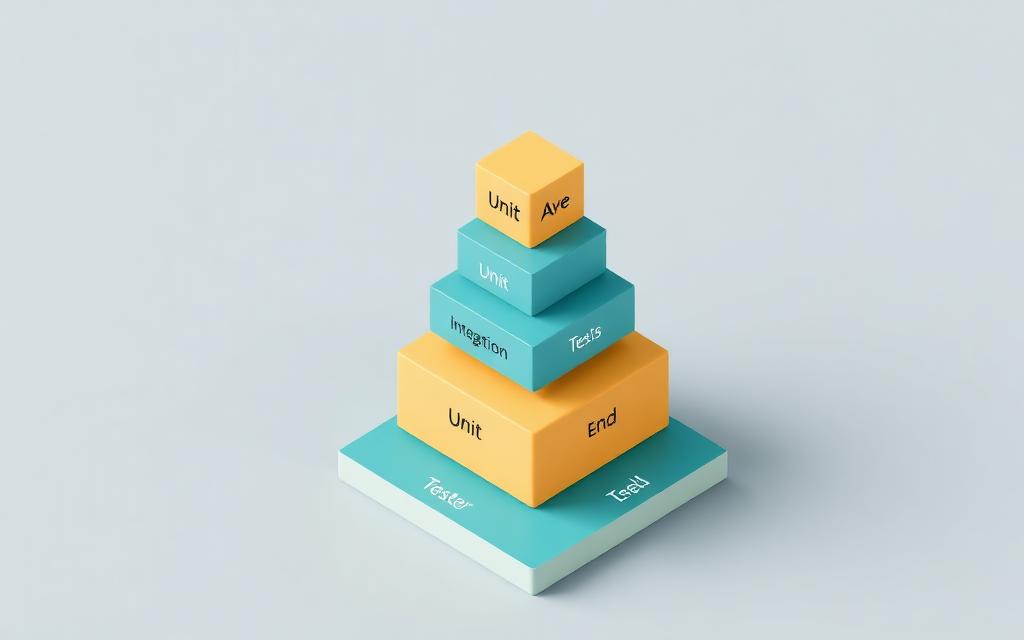
The pyramid was a useful lie
The classic test pyramid — lots of unit tests, some integration tests, a few end-to-end tests — was a useful teaching tool for a decade. Teams shipping testing strategy in 2026 face a market that has stopped rewarding novelty and started rewarding operational discipline. The vendors who win the next renewal cycle are the ones whose customers can answer three questions without opening a spreadsheet: what does this cost per unit of business value, who owns it when it breaks at 3 a.m., and what is the exit plan if the roadmap diverges from ours. Everything else — the benchmarks, the launch posts, the analyst quadrants — is noise around those three questions. The practitioners we spoke to for this piece kept coming back to the same theme: the interesting engineering work is no longer at the edges of what is possible, it is in the middle of what is sustainable.
It stopped matching reality somewhere around the time cloud-native architectures made 'unit' and 'integration' hard to distinguish, and it fully collapsed once serverless and event-driven designs meant that the interesting bugs almost never lived inside a single function.
The shape that replaced it: the trophy, sort of
The most-cited replacement is Kent C. Dodds's testing trophy — heavy on integration tests, lighter on unit and end-to-end. In practice the shape modern teams have converged on is closer to a diamond: a solid base of fast unit tests for pure logic, a wide middle of integration and contract tests, and a narrow top of end-to-end tests focused on critical user journeys.
The exact shape matters less than the underlying principle: test at the level where the interesting behaviour lives. For most modern services, that is the integration layer.
Contract tests have quietly become essential
The single most valuable testing investment we have seen this year is consumer-driven contract testing between services. Pact and its ecosystem have matured to the point where the operational overhead is finally lower than the debugging cost of the contract drift they prevent.
Teams that adopted contract testing report a 40–60% reduction in cross-service incidents within two quarters, which is the largest single-intervention improvement we have measured in testing practice this decade.
End-to-end tests are worth doing, sparingly
The pyramid orthodoxy was to minimise end-to-end tests because they are slow and flaky. That orthodoxy overshot. A small number of end-to-end tests covering the critical user journeys — sign up, checkout, primary workflow — catch a class of bug that no other test layer catches.
The practical rule is: fewer than ten, deterministic, run on every merge to main, owned by a named team. If your end-to-end suite has grown past this shape, prune it.
AI-generated tests: useful, not transformative
AI-generated tests have improved substantially in 2026 but have not changed the fundamental economics. They are excellent at producing tests for pure functions with clear input/output, mediocre at integration tests, and poor at end-to-end tests where domain knowledge dominates.
The pattern that works: use AI to generate the boring 80% and spend the reclaimed time on the interesting 20%. The pattern that does not work: rely on AI-generated tests as the primary safety net.
What a healthy testing strategy looks like today
The healthy strategy for a mid-sized service in 2026: pure-logic unit tests where they add value, a comprehensive integration suite run on every PR, contract tests with every upstream and downstream service, and a small, deterministic end-to-end suite covering critical journeys.
Total build time under ten minutes. Flaky-test rate under 1%. Coverage number ignored — coverage of the right code matters more than a percentage.
The honest summary is that modern testing in 2026 rewards teams who treat it as a product with users, a budget, and a roadmap — not as a project that finishes. The organisations getting ahead are not the ones with the biggest tooling investment; they are the ones with the shortest feedback loop between a production signal and a design change. That loop is a cultural artefact as much as a technical one, and it is built one boring review meeting at a time.
Reader questions, answered
What coverage percentage should we target?+
Whichever number keeps the team honest about testing the important paths. Above 60–70% the marginal test rarely catches a real bug.
Are snapshot tests still worth it?+
For rendered UI components: yes, with discipline. For everything else: rarely.
How do we handle flaky tests?+
Quarantine on first flake, fix or delete within a week. Flaky tests that stay in the suite erode trust in the whole suite.
Raza Ahmad is a technology author and IT infrastructure specialist based in Melbourne, Australia. He writes practitioner-grade guides on cloud computing (Azure and AWS), cybersecurity, enterprise networking with Cisco platforms, Linux administration, DevOps, and virtualization. His work focuses on translating complex infrastructure topics into clear, accurate guidance that engineers, system administrators, and IT decision makers can put to work in production environments. Every article published under his byline is fact-checked against current vendor documentation, official standards, and Raza's own hands-on experience operating the technologies he covers.
More from Software Engineering

Top 10 ICT Companies Hiring H-1B Workers in 2026: Sponsors, Salaries, Roles
A detailed 2026 breakdown of the ten largest ICT employers of H-1B visa holders — approvals, median salaries, top job titles, hiring hubs, and how each company runs its sponsorship pipeline based on the latest USCIS and Department of Labor disclosure data.

Airflow vs Dagster vs Prefect: Choosing a Data Orchestrator
A production-focused comparison of task, asset, and flow orchestration across backfills, testing, deployment, observability, and team fit.
Clean Architecture in TypeScript: A Pragmatic Guide
Clean architecture without the cargo cult. A working TypeScript reference for separating business logic from frameworks, databases, and HTTP.
One email. The technology stories that actually matter for engineers.
A curated digest of the week's most useful tutorials, reviews, and analysis — no clickbait, no AI summaries of someone else's work.
Free. Unsubscribe anytime. See our privacy policy.