LLM Evaluation Frameworks Compared: Measuring Quality Without Ground Truth
How to evaluate LLM systems when there is no single right answer — the techniques, the frameworks, and the trade-offs.

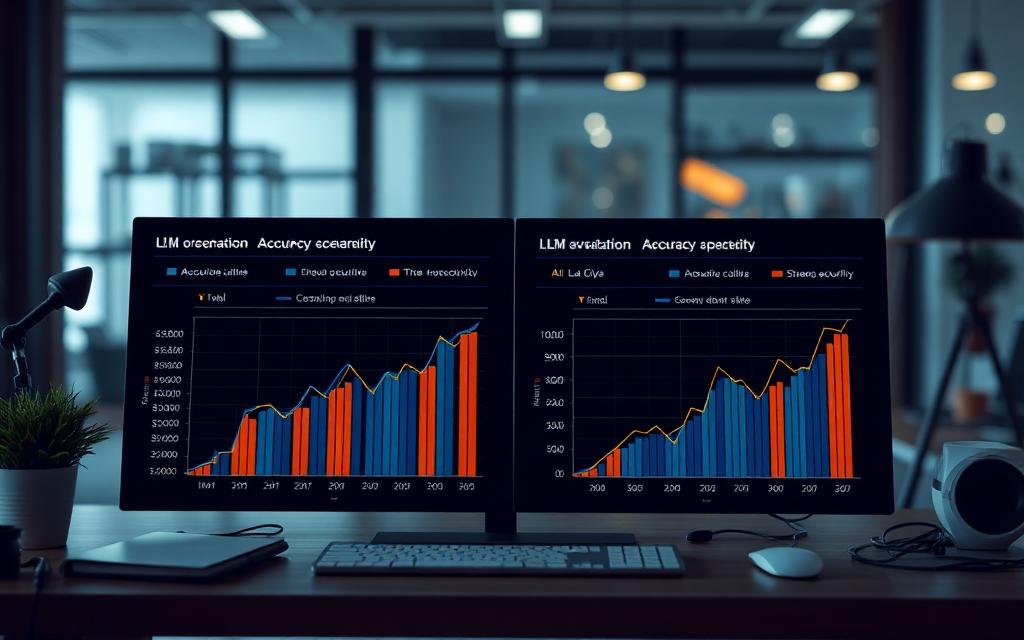
Why LLM evaluation is hard
Traditional ML evaluation has a label and a prediction; you compute accuracy, F1, ROC-AUC. LLM evaluation has a prompt and a free-form response. There is no single right answer for 'summarize this article' — there are many acceptable answers and many unacceptable ones, and the boundary is fuzzy.
Three techniques cover the space: reference-based metrics, model-as-judge, and human evaluation. Each has a place; none is sufficient alone.
Reference-based metrics
When you have a reference answer, you can compute BLEU, ROUGE, METEOR, BERTScore. These work for translation, summarization with a gold summary, and code generation against unit tests. They fail for open-ended generation — there is no reference to compare against.
Their value is fast, deterministic, and free. Use them as the first line of regression detection in CI, even when they are not the final word.
Model-as-judge
A capable LLM evaluates another LLM's output against a rubric. GPT-4 or Claude evaluating Llama-3 outputs is the standard pattern. The evaluator returns a score and a justification.
This scales. It is also biased: judges prefer outputs in their own style, prefer longer outputs, and have systematic blind spots. Calibrate every judge against a small human-evaluated sample. Re-calibrate when you change models.
Human evaluation
The gold standard for subjective quality. Expensive, slow, and the only thing that catches the systematic biases that automated evaluation misses. For high-stakes decisions — model selection, major prompt changes — human evaluation is non-negotiable.
Use pairwise comparison rather than absolute scoring. Humans are much more reliable at choosing between two outputs than at scoring one on a 1–10 scale.
The frameworks
RAGAS for retrieval-augmented systems with grounding and faithfulness metrics. TruLens for end-to-end evaluation across multiple test suites. Phoenix (Arize) for production observability with evaluation built in. DeepEval for unit-test-style evaluation. PromptFoo for CLI-driven comparison runs.
None of these replaces a curated golden dataset. They give you a harness; you supply the test cases.
What to actually measure
Pick three to five metrics that map to the user's experience: groundedness, answer relevance, completeness, tone, safety. Track them on every model or prompt change. Set a regression threshold and a fix-forward policy.
Vanity metrics — token count, latency-without-quality — mislead. Quality and cost are the two real axes.
Reader questions, answered
Can model-as-judge replace human evaluation?+
For most production monitoring, yes — with periodic human calibration. For major decisions, supplement with human evaluation.
Which framework should I start with?+
RAGAS for RAG systems, PromptFoo for prompt comparison, Phoenix for production observability.
Raza Ahmad is a technology author and IT infrastructure specialist based in Melbourne, Australia. He writes practitioner-grade guides on cloud computing (Azure and AWS), cybersecurity, enterprise networking with Cisco platforms, Linux administration, DevOps, and virtualization. His work focuses on translating complex infrastructure topics into clear, accurate guidance that engineers, system administrators, and IT decision makers can put to work in production environments. Every article published under his byline is fact-checked against current vendor documentation, official standards, and Raza's own hands-on experience operating the technologies he covers.
More from Artificial Intelligence
Quantum Computing Progress in 2026: Where the Industry Actually Stands
A grounded look at the qubit counts, error-correction milestones, hardware roadmaps, and real-world workloads that define quantum computing in 2026 — and what still separates today's machines from useful advantage.

How To Run Local LLMs on Your Own Hardware in 2026: A Practical Guide
Everything an engineer needs to run capable open-weight language models on a workstation or homelab in 2026 — hardware sizing, quantisation, serving stacks, and the privacy and cost math that finally makes local inference worth doing.

Anthropic in 2026: How Claude Became the Enterprise AI of Choice
Inside Anthropic's research roadmap, Claude's model family, and why regulated industries are quietly standardising on it for production workloads.
One email. The technology stories that actually matter for engineers.
A curated digest of the week's most useful tutorials, reviews, and analysis — no clickbait, no AI summaries of someone else's work.
Free. Unsubscribe anytime. See our privacy policy.