Quantum Computing Progress in 2026: Where the Industry Actually Stands
A grounded look at the qubit counts, error-correction milestones, hardware roadmaps, and real-world workloads that define quantum computing in 2026 — and what still separates today's machines from useful advantage.

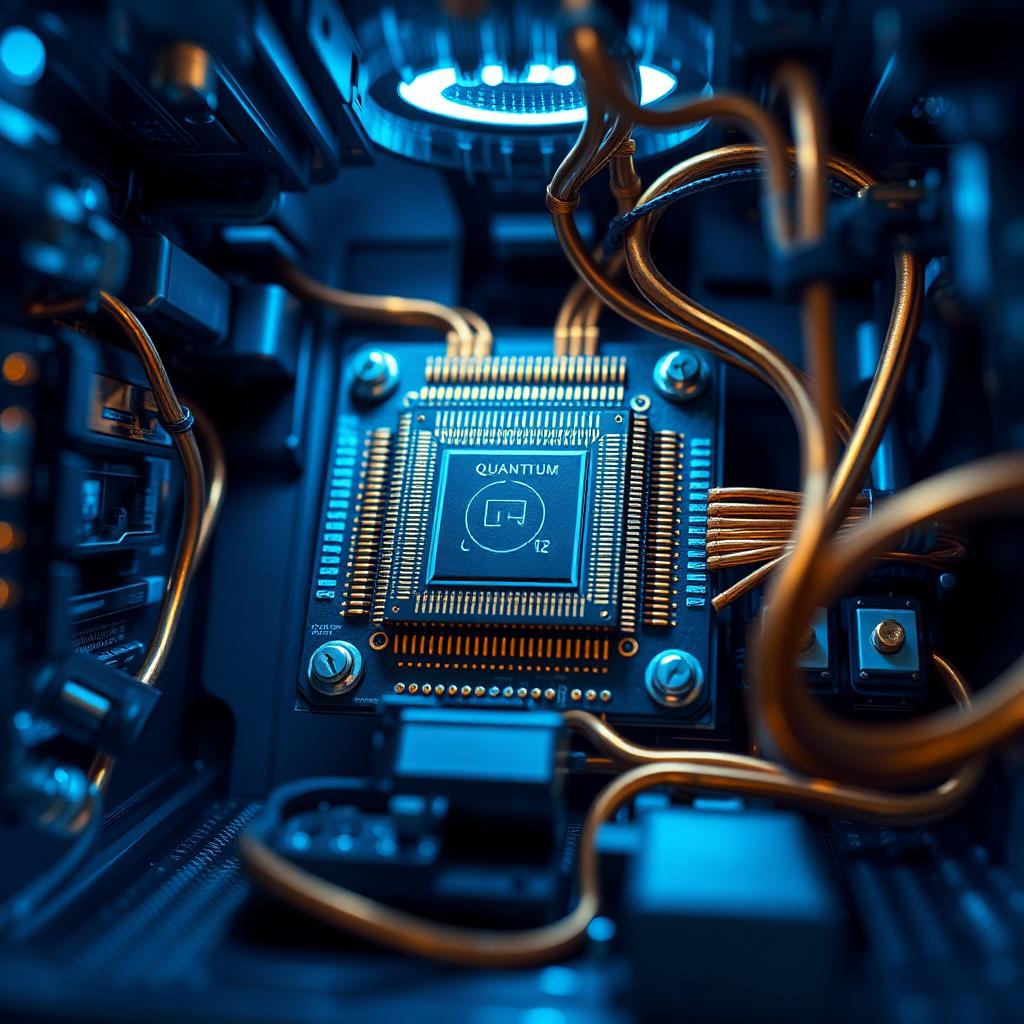
The state of quantum computing in 2026
Quantum computing spent most of the last decade in a familiar cycle: a headline about a new record qubit count, a spike of investor excitement, a wave of think-pieces about cryptography ending, and then a quiet return to the lab. In 2026 that cycle is finally breaking. The interesting news is no longer 'we built a bigger chip.' It is 'we ran a logical qubit below the physical error rate, and kept it stable long enough to matter.' That single shift — from raw qubit counts to fault-tolerant behaviour — is what makes this year different from any of the previous five.
The industry now has three credible hardware families with public roadmaps: superconducting transmon systems from IBM, Google, and Rigetti; trapped-ion machines from IonQ, Quantinuum, and Oxford Ionics; and neutral-atom arrays from QuEra, Atom Computing, and Pasqal. Photonic approaches from PsiQuantum and Xanadu remain further out but are attracting serious capital. Each family is solving a different subset of the same core problem: how to hold quantum information still long enough to do useful work with it.
For engineering leaders and technology buyers, the practical question is not 'when does quantum replace classical?' — the honest answer is 'not for general workloads this decade.' The practical question is 'which specific problems will benefit first, and how should we prepare our cryptography, our talent pipeline, and our vendor relationships now?' This article walks through what has actually shipped in 2026, what remains hype, and what a defensible position looks like today.
Logical qubits are the metric that matters now
For years, headlines measured progress in physical qubits — the raw two-level systems etched onto a chip or held in a trap. That number is still growing (IBM's Kookaburra-class systems are now in the four-figure range, and neutral-atom arrays have demonstrated more than 1,000 atoms in a single register), but it is the wrong scoreboard. A physical qubit that decoheres in a hundred microseconds cannot run a meaningful algorithm no matter how many you connect together.
The metric that matters in 2026 is the logical qubit: a group of physical qubits stitched together by an error-correcting code such that the encoded state survives longer than any single component. Google's 2024 surface-code demonstration was the proof of principle; the follow-on work from Google Quantum AI, IBM, and Quantinuum through 2025 and into 2026 has repeatedly shown logical error rates falling as code distance increases. That is the crossover physicists have been chasing since Peter Shor first described the idea in 1995.
The number of stable logical qubits currently demonstrated is small — best-in-class labs report tens rather than thousands — but the trend line is now clearly exponential in the right direction rather than plateaued. When a vendor tells you their machine has 5,000 qubits, the correct follow-up questions are: how many logical qubits does that translate to under your preferred code, what is the logical error rate, and how long does the state survive.
Superconducting systems: scale meets stubborn noise
IBM remains the most publicly detailed superconducting player. The Condor and Heron families pushed processor sizes past 1,000 physical qubits, and the current roadmap targets modular systems that stitch multiple chips together with cryogenic interconnects rather than trying to fabricate one monolithic wafer. The engineering achievement here is real: modularity is the only credible path to million-qubit machines because yield and control-line density both fall off a cliff on single dies.
Google's approach is narrower and, arguably, deeper. Rather than racing on qubit count, the Quantum AI team has spent 2025 and 2026 iterating on the surface code on its Willow-class chips, pushing logical error rates down and demonstrating repeatable below-threshold behaviour. That is the result that changed the tone of the entire field, because it removes the last serious scientific doubt about whether fault-tolerant quantum computing is physically possible at scale.
The unresolved problem for all superconducting systems is the cryogenic stack. Every qubit needs coax control lines running from room-temperature electronics down through multiple thermal stages into a dilution refrigerator at around 15 millikelvin. Beyond a few thousand qubits, the wiring itself becomes the bottleneck. Cryo-CMOS control chips, photonic interconnects, and multiplexed readout are all being prototyped, but none is yet production-grade.
Trapped-ion and neutral-atom systems: fewer, cleaner qubits
Trapped-ion and neutral-atom platforms take the opposite bet. Instead of fabricating qubits in silicon and fighting decoherence, they use individual atoms held in electromagnetic or optical traps. Coherence times are orders of magnitude longer, gate fidelities on the best systems have crossed 99.9% for two-qubit operations, and every qubit is physically identical because it is, literally, the same atom.
Quantinuum's H-series systems have led the trapped-ion side, publishing repeated demonstrations of high-fidelity logical operations and real-time syndrome extraction. Oxford Ionics has combined trapped ions with silicon control chips, which is a promising manufacturability story. On the neutral-atom side, QuEra and Atom Computing have both crossed the thousand-atom threshold in 2025-26, with dynamic reconfiguration of the array during a computation — something superconducting chips cannot do.
The trade-off is speed. Trapped-ion gates are measured in microseconds to milliseconds, versus tens of nanoseconds on a superconducting chip. For a shallow algorithm that only needs a handful of high-fidelity operations, this is fine. For deep circuits that require billions of gates, it is not. The industry's honest position in 2026 is that no single hardware family has won, and it is entirely plausible that different problem classes will run on different substrates for the next decade.
What quantum computers can and cannot do useful work on today
The most damaging myth in this field is that a quantum computer is a faster classical computer. It is not. It is a different kind of computer that offers speedups on a narrow class of problems where structure in the mathematics maps to interference between quantum amplitudes. For everything else — the vast majority of software you actually run — a modern GPU is faster, cheaper, and considerably easier to program.
The problems where quantum systems have a credible theoretical advantage remain the ones physicists identified in the 1990s and 2000s: simulating quantum chemistry and materials, factoring large integers (Shor's algorithm), searching unstructured spaces (Grover's algorithm), and certain optimisation and sampling problems. In 2026, the most commercially interesting near-term applications are in the first category — battery chemistry, catalyst design, and drug discovery — because even a moderately capable fault-tolerant machine could out-simulate the largest classical computers for specific molecular systems.
Cryptography is the second-order concern. Shor's algorithm still requires millions of high-quality physical qubits to break RSA-2048, and no vendor is credibly promising that in the 2020s. However, the migration to post-quantum cryptography is happening now because encrypted traffic captured today can be decrypted later. NIST finalised its first post-quantum standards (ML-KEM, ML-DSA, and SLH-DSA) in 2024, and every serious enterprise should be actively planning a crypto-agility rollout in 2026, regardless of quantum timelines.
How to prepare your organisation without being sold a bridge
The right posture for most organisations in 2026 is engaged, informed, and skeptical. Do not sign a multi-year quantum-as-a-service contract on the promise of a business advantage that has not been demonstrated. Do allocate research time, monitor the primary literature, and build relationships with the cloud platforms (IBM Quantum, Amazon Braket, Azure Quantum) that expose current hardware behind a normal API so your team can experiment cheaply.
If your business depends on long-lived encrypted secrets — health records, intellectual property, government-classified data, financial transaction archives — the post-quantum cryptography migration is not optional and it is not future work. Begin the inventory of TLS endpoints, VPN tunnels, code-signing keys, and hardware security modules that need to move to hybrid or fully post-quantum algorithms. Vendor support for ML-KEM in TLS 1.3 shipped in mainstream browsers and load balancers during 2025, so most of the ecosystem is finally ready.
Talent is the other constraint people underestimate. The best hires in this field come from physics and applied mathematics backgrounds, not from computer science conversion courses. Budget for one or two senior researchers to represent the discipline internally rather than trying to reskill the entire platform team. Their job for the next three years is to translate what is actually shipping into decisions your organisation can act on.
What to watch through the rest of 2026 and into 2027
Three signals will tell you the field is moving from research to engineering. First, sustained logical-qubit demonstrations at code distance seven and above, with logical error rates below 10⁻⁶ per operation — that is the regime where practically useful fault-tolerant circuits become plausible. Second, a public, third-party-verified quantum advantage on a problem that has commercial value, not just a contrived sampling task. Third, a credible cost-per-logical-qubit-hour figure from at least one cloud provider, because until quantum time is priced like classical compute, buyers cannot plan.
None of those three will land in a single announcement. They will accumulate quietly across conference papers, arXiv preprints, and vendor blog posts through 2026 and 2027. Set a Google Scholar alert on 'logical qubit' and 'quantum error correction', follow the primary hardware groups directly, and treat mainstream tech-press coverage as a lagging indicator rather than a source.
The honest summary of 2026 is that quantum computing has finally stopped being purely a physics story and started to look like an engineering discipline with a clear, difficult, but tractable roadmap. It will not replace your data centre this year, or next, or the year after. It is, for the first time, plausible that a specific subset of your workloads will run on it before the end of this decade. That is worth paying attention to, without losing your head.
Reader questions, answered
Will quantum computers break current encryption in 2026?+
No. Breaking RSA-2048 with Shor's algorithm requires on the order of millions of high-quality physical qubits with active error correction. No vendor has that today, and public roadmaps do not credibly show it inside this decade. The reason to migrate to post-quantum cryptography now is that encrypted traffic captured today could be decrypted later.
How many qubits do the leading systems have in 2026?+
Superconducting systems from IBM and others have crossed 1,000 physical qubits per module, and neutral-atom arrays have demonstrated similar counts. However, the meaningful number is logical qubits — currently in the tens for the best-in-class demonstrations — because only logical qubits can run algorithms long enough to be useful.
Should my company buy quantum hardware today?+
Almost certainly no. Access via cloud providers (IBM Quantum, Amazon Braket, Azure Quantum) is more than sufficient for research, prototyping, and workforce development. On-premise quantum hardware makes sense only for a very small number of national labs and specialised research organisations.
Which problems will quantum computers actually solve first?+
Quantum chemistry and materials simulation are the most likely near-term commercial wins because they map naturally to the physics of the machine. Optimisation, sampling, and certain machine-learning subproblems are also promising, but many claimed advantages here have not survived comparison to modern classical algorithms.
Raza Ahmad is a technology author and IT infrastructure specialist based in Melbourne, Australia. He writes practitioner-grade guides on cloud computing (Azure and AWS), cybersecurity, enterprise networking with Cisco platforms, Linux administration, DevOps, and virtualization. His work focuses on translating complex infrastructure topics into clear, accurate guidance that engineers, system administrators, and IT decision makers can put to work in production environments. Every article published under his byline is fact-checked against current vendor documentation, official standards, and Raza's own hands-on experience operating the technologies he covers.
More from Artificial Intelligence
How To Run Local LLMs on Your Own Hardware in 2026: A Practical Guide
Everything an engineer needs to run capable open-weight language models on a workstation or homelab in 2026 — hardware sizing, quantisation, serving stacks, and the privacy and cost math that finally makes local inference worth doing.
Anthropic in 2026: How Claude Became the Enterprise AI of Choice
Inside Anthropic's research roadmap, Claude's model family, and why regulated industries are quietly standardising on it for production workloads.
Getting Started with Large Language Models: A Practical Guide for Engineers
What you actually need to know about tokens, embeddings, RAG, and evaluation to ship LLM features that hold up in production.
One email. The technology stories that actually matter for engineers.
A curated digest of the week's most useful tutorials, reviews, and analysis — no clickbait, no AI summaries of someone else's work.
Free. Unsubscribe anytime. See our privacy policy.