Ransomware Response: What the First 24 Hours Should Actually Look Like
A practitioner's timeline for the first day of a ransomware incident — the decisions, the artefacts, and the mistakes that turn a bad day into a business-ending one.


The first hour: contain, do not investigate
The single most expensive mistake in a ransomware incident is trying to understand what happened before stopping it from spreading. Teams shipping ransomware response in 2026 face a market that has stopped rewarding novelty and started rewarding operational discipline. The vendors who win the next renewal cycle are the ones whose customers can answer three questions without opening a spreadsheet: what does this cost per unit of business value, who owns it when it breaks at 3 a.m., and what is the exit plan if the roadmap diverges from ours. Everything else — the benchmarks, the launch posts, the analyst quadrants — is noise around those three questions. The practitioners we spoke to for this piece kept coming back to the same theme: the interesting engineering work is no longer at the edges of what is possible, it is in the middle of what is sustainable.
In the first hour the priority is isolation. Network-segment the affected estate, disable the compromised identities, revoke the sessions, and take the affected virtualisation cluster off the management network. Everything else — attribution, root cause, negotiation — waits.
The teams that recover fastest have pre-approved isolation playbooks that can be executed by the on-call without a change ticket. If your incident response requires a CAB meeting to disable an account, you have already lost the incident.
Hours 2–6: preserve the evidence you will need later
The temptation in hour three is to start rebuilding. Do not. The forensic evidence that will support your insurance claim, your regulatory filings, and any downstream civil action lives on the disks and in the memory of the compromised hosts.
Snapshot every affected virtual machine at the hypervisor layer before touching it. Preserve the volume shadow copies. Export the last 30 days of authentication logs, EDR telemetry, and firewall flows to write-once storage. The cost of this step is a few hours; the cost of skipping it is a claim denial six months later.
Hours 6–12: understand the blast radius
Once containment holds and evidence is preserved, the response shifts to scoping. Which identities were used? Which systems did they authenticate to? Which data was accessed, and which was exfiltrated?
Exfiltration is the question that matters most for regulatory notification. Modern ransomware operators exfiltrate first and encrypt second, and the exfiltration is often visible in cloud storage egress metrics and DNS logs days before the encryption event.
This is also the point at which legal, communications, and executive leadership need to be looped in with a clear picture. The worst version of a ransomware incident is the one where leadership learns key facts from the media.
Hours 12–24: the recovery decision
By hour twelve the response team needs to make the recovery decision: restore from backups, rebuild from gold images, or — in the worst case — negotiate. Each path has a different timeline and a different set of pre-conditions.
Backup-based recovery only works if the backups themselves survived. Modern ransomware operators specifically target Veeam, Commvault, and cloud backup vaults. If your backup credentials share an identity plane with your production environment, assume the backups are compromised until proven otherwise.
Rebuilding from gold images is slower but produces a cleaner environment. The tradeoff is data loss between the last known-good backup and the incident.
What separates the fast recoveries from the slow ones
The organisations that recover in days rather than weeks share three characteristics: immutable backups on a separate identity plane, a documented and rehearsed isolation playbook, and a pre-agreed relationship with an incident-response firm.
None of these are technology decisions. They are operational and contractual decisions made months before the incident. The technology is table stakes.
The honest summary is that ransomware response in 2026 rewards teams who treat it as a product with users, a budget, and a roadmap — not as a project that finishes. The organisations getting ahead are not the ones with the biggest tooling investment; they are the ones with the shortest feedback loop between a production signal and a design change. That loop is a cultural artefact as much as a technical one, and it is built one boring review meeting at a time.
Reader questions, answered
Should we ever pay the ransom?+
That is a legal, insurance and executive decision, not a technical one. The technical team's job is to make sure paying is never the only option — which is what immutable backups deliver.
When do we notify regulators?+
Under most modern frameworks (NIS2, SEC, state breach laws) the clock starts at 'reasonable belief of a material incident', which is usually somewhere between hour six and hour twelve. Have your legal counsel briefed early.
Do we need an external IR firm?+
For anything beyond a small, contained event: yes. The retainer is cheap insurance and shortens recovery by days.
Raza Ahmad is a technology author and IT infrastructure specialist based in Melbourne, Australia. He writes practitioner-grade guides on cloud computing (Azure and AWS), cybersecurity, enterprise networking with Cisco platforms, Linux administration, DevOps, and virtualization. His work focuses on translating complex infrastructure topics into clear, accurate guidance that engineers, system administrators, and IT decision makers can put to work in production environments. Every article published under his byline is fact-checked against current vendor documentation, official standards, and Raza's own hands-on experience operating the technologies he covers.
More from Cybersecurity
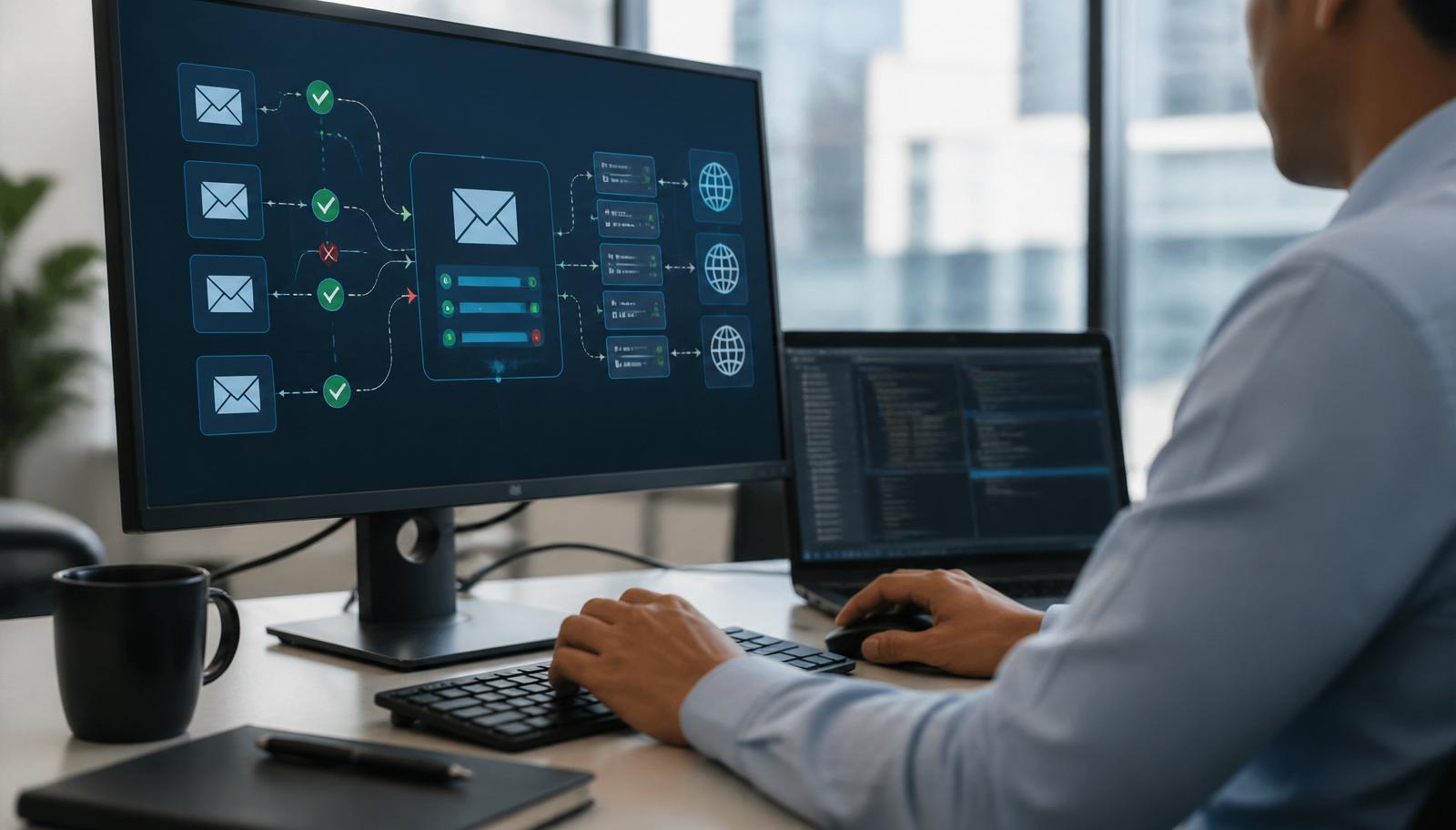
Stopping Business Email Compromise: A Practical DMARC Rollout
How SPF, DKIM, and DMARC work together, how to reach enforcement without breaking legitimate mail, and which BEC controls you still need afterward.

Inside Cisco Talos in 2026: How the Largest Commercial Threat Intelligence Team Actually Works
A practitioner's look at Cisco Talos in 2026 — how its telemetry, research, and reputation feeds flow into Secure Firewall, Umbrella, XDR and Duo, where the intelligence is genuinely differentiated, and how to use it without over-trusting a single vendor.

Juniper Advanced Threat Prevention in 2026: What Replaced Sky ATP and How It Fits the Cloud-First SRX
A practitioner's guide to Juniper Advanced Threat Prevention Cloud in 2026 — the evolution of the original Sky ATP service, how sandboxing and reputation feeds work with SRX and MX, and how to evaluate it against Palo Alto WildFire, Cisco Secure Malware Analytics and Check Point ThreatCloud.
One email. The technology stories that actually matter for engineers.
A curated digest of the week's most useful tutorials, reviews, and analysis — no clickbait, no AI summaries of someone else's work.
Free. Unsubscribe anytime. See our privacy policy.