Docker vs Podman: Which Container Runtime Should You Use in 2026?
A clear-eyed comparison of Docker and Podman covering daemon architecture, rootless containers, Kubernetes alignment, and the production trade-offs of each.

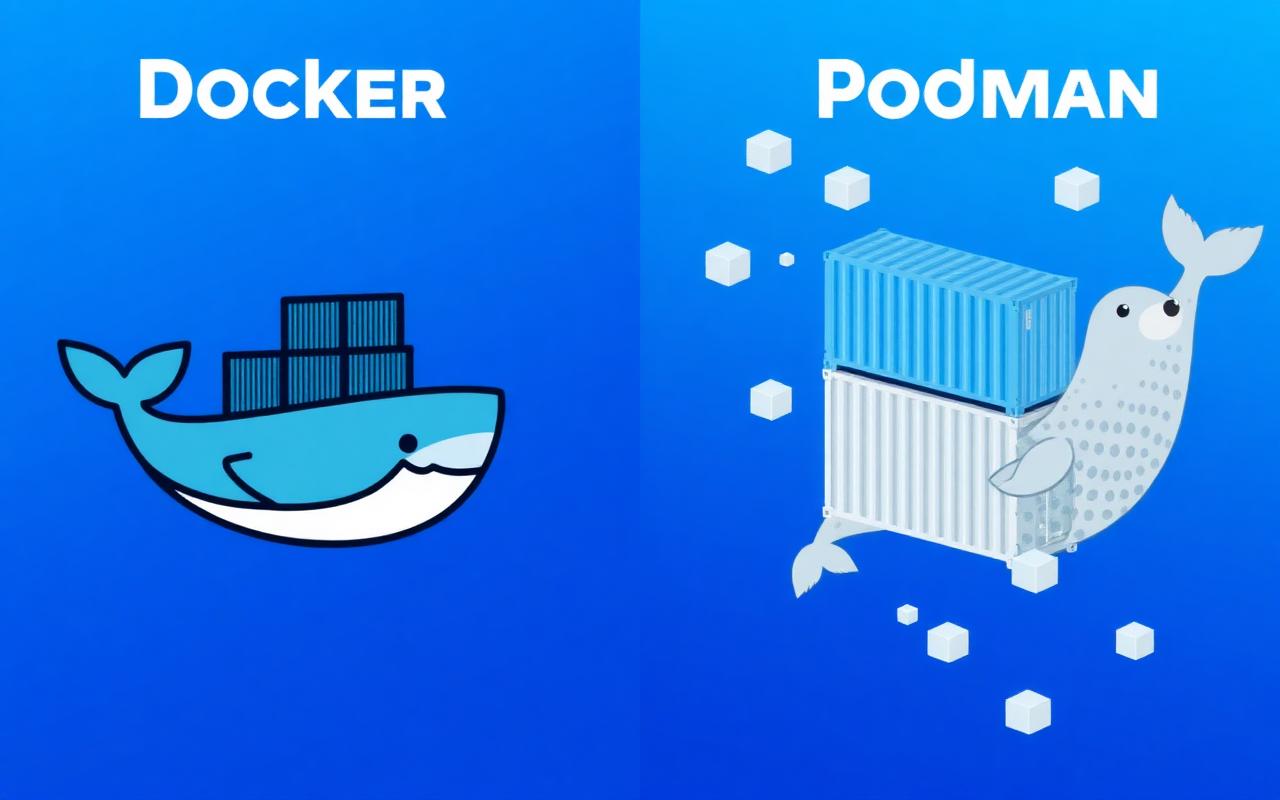
The state of container runtimes
Docker pioneered the modern container experience and remains the most familiar tool in the ecosystem. Podman emerged as the daemonless, rootless-first alternative championed by Red Hat. In 2026 both are mature and the choice is more about ergonomics and ecosystem fit than about capability.
Architecture: daemon vs daemonless
Docker runs a privileged daemon (dockerd) that handles container lifecycle. Podman runs containers as child processes of the user invocation, with no central daemon. The daemonless model is operationally simpler, eliminates a privileged single point of failure, and integrates more naturally with systemd.
Rootless containers
Both Docker and Podman support rootless mode. Podman defaults to rootless and the experience is more polished; Docker rootless works but feels like a retrofit. For multi-tenant build hosts or CI runners, rootless containers are an important security boundary.
Compose and developer experience
Docker Compose remains the most widely used local development tool. Podman supports docker-compose through podman-compose and a Docker-compatible socket; the experience is now close enough that most Compose files run unchanged on Podman.
Kubernetes alignment
Kubernetes deprecated direct Docker support in 1.20 and removed dockershim in 1.24. Production Kubernetes clusters use containerd or CRI-O. The runtime you use for local development can differ from the production runtime without practical issues — both Docker and Podman build OCI-compliant images that run on either.
When to pick which
Pick Docker if your team's familiarity with the tooling is a substantial advantage and you do not need rootless as a hard requirement. Pick Podman if you run on RHEL family Linux, want first-class rootless and systemd integration, or are operating multi-tenant build infrastructure. For most teams the choice is reversible — both tools build the same images and run the same containers.
Reader questions, answered
Will Docker disappear?+
No. Docker the company has stabilized and Docker the tool remains the most familiar entry point for new developers.
Raza Ahmad is a technology author and IT infrastructure specialist based in Melbourne, Australia. He writes practitioner-grade guides on cloud computing (Azure and AWS), cybersecurity, enterprise networking with Cisco platforms, Linux administration, DevOps, and virtualization. His work focuses on translating complex infrastructure topics into clear, accurate guidance that engineers, system administrators, and IT decision makers can put to work in production environments. Every article published under his byline is fact-checked against current vendor documentation, official standards, and Raza's own hands-on experience operating the technologies he covers.
More from Programming & Development
The Kubernetes Production Readiness Checklist Engineers Actually Use
A practitioner's checklist for taking a Kubernetes cluster from “it works on my laptop” to “I am happy to be on call for this.”
Terraform vs Pulumi: Which Infrastructure-as-Code Tool Should You Choose?
A working engineer's comparison of the two leading IaC platforms based on real deployments at scale.

The Complete Linux Administration Guide for Production Servers
A working systems administrator's reference for installing, hardening, monitoring, and troubleshooting Linux servers in real production environments.
One email. The technology stories that actually matter for engineers.
A curated digest of the week's most useful tutorials, reviews, and analysis — no clickbait, no AI summaries of someone else's work.
Free. Unsubscribe anytime. See our privacy policy.